How to Introduce Kids Ages 3 to 6 to Skiing: Pacing, Hot Chocolate Stops & Family Private Lessons
Plan skiing with kids ages 3 to 6: check readiness, pace first lessons, pack warm spares and arrange family coaching in Beaver Creek, Canyons or Rusutsu.
Ski Resort Lessons
Your child is excited about snow until the boots feel strange, a mitten gets wet and someone suggests taking the lift. Suddenly, the family ski day feels much bigger than the small person at its center.
Skiing with kids ages 3 to 6 works best when you plan around readiness, comfort and short, manageable experiences. Confirm that the lesson is suitable for your child, leave time for equipment and bathroom stops, and make warming breaks part of the day rather than something earned by completing another run.
There is no guaranteed tear-free formula. The aim is to create a first experience that leaves room for curiosity and a willingness to return, not to make a preschooler match an adult's ski itinerary.
Is your child ready for a first ski lesson?
Age matters, but it is not the only question. The American Academy of Pediatrics identifies age, strength and ability to cooperate as factors to consider before lessons. It also notes that instructors can help parents assess readiness.
A child who has just turned three may have different needs from a six-year-old sibling, and children of the same age can respond differently to boots, snow and unfamiliar adults.
Before arranging instruction, discuss whether your child can:
Communicate discomfort or ask for help in a familiar way.
Engage with simple instructions and a new activity.
Move comfortably in appropriately fitted equipment.
Participate without being too tired, unwell or distressed.
These are conversation prompts, not an admission test. Ask SRL to confirm age suitability, instructor availability, equipment needs and any applicable requirements before booking. Do not assume every private lesson accepts a three-year-old simply because it is private.
If your child has a health condition, previous injury or activity restriction, seek individual advice before traveling and share relevant limitations when arranging the lesson.
Define a small first-day success
For a young child, success might be meeting the instructor, exploring the snow or making a short controlled glide. It does not have to involve a chairlift or a full green run.
Let the instructor identify a suitable starting task. Asking your child to demonstrate something to the whole family can turn a manageable exercise into a performance they did not agree to give.
Use specific, simple encouragement: “You listened when it was time to stop” or “You told us your hands were cold.” Avoid comparisons with siblings or promises that the next slope is easy when you have not assessed it with the coach.
The useful question at the end is not how much terrain your child covered. It is what felt manageable and what they might like to try next time.
Plan the morning before you reach the snow
Leave time for boots, clothing and the bathroom
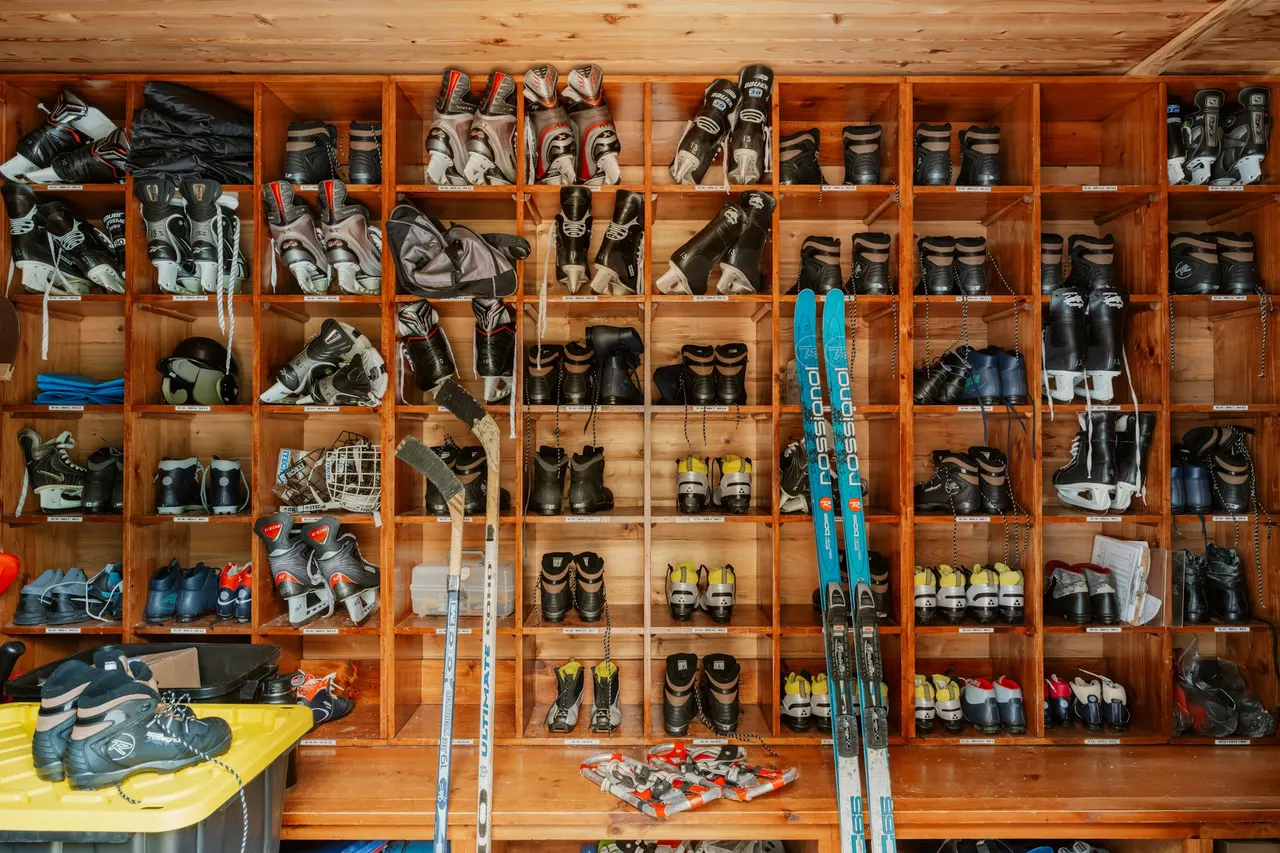
Rental fitting is part of the day, not something to squeeze into the last few minutes before the lesson. Let the rental team check boot and helmet fit, and ask your child to describe any discomfort before leaving the shop.
Tell the technician the child's current information and let the shop set up the ski equipment. Do not borrow a sibling's settings or assume equipment is suitable because the sizes look similar.
Use the bathroom before putting every layer back on. Agree with the instructor how bathroom needs, parent contact and handover will work. A ski lesson should not be assumed to include childcare or personal-care arrangements that have not been confirmed.
Pack for wet mittens, not just the family photograph
Bring spare dry gloves or mittens, socks and clothing appropriate to the forecast. Check that your child's outfit allows comfortable movement and that goggles work with the helmet.
The AAP's winter-safety guidance recommends several thin layers, changing wet clothes promptly and regular indoor warming breaks. Check your child's comfort throughout the day rather than waiting for a complaint.
Avoid adding a bulky hat that changes helmet fit. Ask the rental team about compatible headwear and follow the helmet manufacturer's guidance.
Build the lesson around short activities and regular resets
A three-hour booking does not mean a young child should ski continuously for three hours. Discuss whether the offered session and its break arrangements are suitable before paying; do not assume that a particular custom schedule or refund is automatically available.
The example below is a conversation framework, not a fixed timetable or a service package.
| Part of the experience | A child-centered approach | What parents should confirm |
|---|---|---|
| Meeting the instructor | Introduce names, show equipment and explain one small next step. | Where the parent waits and how contact works. |
| First snow activity | Use a suitable learning space and a manageable task. | Terrain and facility access for this booking. |
| Early practice | Repeat while the child is engaged and comfortable. | How the instructor will signal a break or change the task. |
| Warming stop | Check clothing, bathroom needs, food and water. | Who supervises the child during the break. |
| Another short activity | Return only if the child is ready and conditions remain suitable. | The appropriate way to finish if the child has had enough. |
The instructor should adapt the activity to the child rather than following an adult's target number of runs. If every attempt is becoming a struggle, the next useful step may be a break or the end of skiing for the day.
Make hot chocolate a pause, not a bargaining tool
A sheltered drink stop can be a pleasant family ritual. Choose a child-appropriate temperature, account for allergies and keep the focus on warming up and checking how everyone feels.
Do not make access to food, water, warmth or the bathroom conditional on finishing another run. “We can stop and warm up” is a clearer plan than “You get a drink only if you stop crying.”
The drink is optional. A quiet indoor break with water and a familiar snack can serve the same purpose when that is what your child needs.
What to do when a child refuses or starts crying
Pause and look for a practical cause before labeling the reaction as stubbornness. A child may be cold, tired, hungry, uncomfortable in boots or overwhelmed by a new task.
Ask a simple question and let the instructor help interpret what is happening. Offer a manageable choice, such as taking a break or returning to a familiar activity, rather than presenting a steeper slope as the only way forward.
If a child is distressed, do not force the session to continue because it has been paid for. Discuss the actual options with the instructor and booking provider. Finishing early may be appropriate, but it does not automatically create a refund entitlement.
A calm finish can be a successful outcome. There is no need to turn the first ski day into a test of determination.
Beaver Creek, Canyons Village or Rusutsu with young children?
Choose the learning setup and daily logistics, not just the destination's family reputation. A beginner-area name does not guarantee that every facility is available to an independently booked instructor or appropriate for your child's first session.
Beaver Creek: discuss Haymeadow Park and a convenient meeting point
Haymeadow Park is a dedicated base-area learning zone at Beaver Creek. Use that name when discussing where a suitable first lesson could begin, but confirm the actual terrain, lift or carpet access and meeting arrangements for your booking.
Ask how far the child will need to walk with equipment and where the nearest agreed warming or bathroom stop will be. You can arrange private family ski lessons in Beaver Creek, subject to confirming the child's suitability and instructor availability.
Canyons Village: check the journey to High Meadow Park
High Meadow Park is on the Canyons side of Park City Mountain and is described as beginner learning terrain. Ask about the full journey to the practice area rather than assuming every first lesson starts beside your accommodation.
Discuss lift preparation, how the group will stay together and what happens if a child needs to stop. When booking private lessons in Canyons Village, make clear which children are first-timers and which adults intend to participate.
Rusutsu: keep the first objective close and manageable
Rusutsu's West Mountain includes the Family Course, described in published course information as beginner terrain near the resort hotel. It is a route to discuss with the instructor, not a promise that a child is ready to ski its full length.
Snow play and ski instruction are different activities with different access and supervision arrangements. Do not assume a private lesson includes entry to a resort-operated children's park, nursery or official-school program.
Arrange private ski lessons in Rusutsu, then confirm age suitability, availability and a quote for your dates through the booking process and WhatsApp.
Destination facts checked November 3, 2026, against Beaver Creek's Signature Parks information, Park City Mountain's High Meadow Park guidance and Rusutsu's published family and course information. They do not establish today's opening status or access terms.
Can parents and young children share one private lesson?
Sometimes a shared lesson is a good fit, but the booking needs to match the actual participants. An adult beginner and a young first-timer may need different tasks, rest patterns and attention. A confident older sibling adds another set of goals.
Tell SRL who wants to ski, their ages and their current abilities before deciding. Confirm whether one instructor can appropriately teach that group or whether separate instruction is needed. Do not assume a general group-capacity limit means every family combination is suitable.
Lessons entirely in the child's familiar language, English, Spanish or Portuguese, can help the instructor explain the next task and understand discomfort. Parents should also agree how much to participate, where to wait and how to communicate without giving competing instructions.
Ski Resort Lessons is an independent online platform connecting clients with qualified, experienced independent ski and snowboard instructors. It is not the resort-owned official ski school. Some instructors hold certifications and others bring substantial mountain experience; no universal certification guarantee applies.
Private lesson pricing in the United States and Canada
Sessions start at $449 USD for a three-hour half day or $599 USD for a six-hour full day, for one person. Add $100 USD for the second participant and $50 USD for each additional participant.
The general maximum is four beginners or six intermediate or advanced participants. Young children's needs may make a smaller group or another arrangement more appropriate; confirm suitability rather than filling every place automatically.
Four compatible beginners sharing a three-hour session pay $649 USD total, or $162.25 USD each. This arithmetic does not confirm acceptance of a particular child or family group.
Coordinate meeting points, passes and equipment rental directly by WhatsApp before the session. Passes and rental are separate arrangements. For Japan, request a resort- and date-specific quote instead of applying North American prices.
SRL's 100% Weather Guarantee provides free rescheduling or a full refund if the resort closes its slopes because of a storm. It does not automatically cover a child's reluctance, fatigue or an early finish.
Cold and injury signs are reasons to stop
Do not treat persistent shivering, unusual sleepiness, clumsiness or confusion as something a child should work through to complete a lesson. The CDC identifies these among signs of hypothermia requiring immediate medical attention.
Get help from the instructor, ski patrol or local emergency services and move to shelter safely. After a fall, a child who has significant pain, cannot use a limb normally or has a concerning head injury needs assessment rather than another run to see whether it improves.
A lesson, helmet and carefully chosen terrain can support a better-prepared trip. None guarantees that a child cannot become cold, fall or collide with another slope user.
Check family winter-sports medical insurance before traveling
Medical planning is part of a family ski holiday, even if the skiing stays in a beginner area. An accident can involve assessment, imaging, transport or hospital care beyond the first consultation.
For a documented Utah example, Park City Fire District lists paramedic ground transport at $2,383.73 USD plus $42.24 USD per mile under its schedule effective July 1, 2025. See the district's EMS billing information, checked November 3, 2026. These are transport charges, not a routine clinic fee or an individual quote; rates may change.
That illustrates how a serious incident can involve thousands before all treatment costs are known. It does not mean every child's minor fall or clinic consultation costs that amount.
SafetyWing vs. World Nomads: check each child's eligibility
Affiliate Disclosure: This article contains affiliate links to SafetyWing and World Nomads. Ski Resort Lessons may receive a commission if you purchase through these links.
| Provider | Relevant recreational snow-sports conditions | Family questions to confirm |
|---|---|---|
| SafetyWing | Essential lists recreational skiing and snowboarding subject to its conditions, excluding off-piste activity and activity against local safety advice. Complete advertises on-piste injury coverage with a helmet requirement. | Is each child eligible and correctly included? Does the selected product cover the destination and planned activity? Do not assume a parent's cover automatically extends to everyone. |
| World Nomads | Options may include on-piste and off-piste skiing or snowboarding within resort boundaries, depending on residence and plan. Its US page lists these in-bounds activities under Standard, with broader activities under Explorer. | Check each traveler's age and residence, the issued plan and winter-sports requirements. Off-piste eligibility does not make that terrain suitable for a young beginner. |
Descriptions follow SafetyWing's sports FAQ, its Complete product information and World Nomads' US snow-sports guidance. Other markets may require a winter-sports upgrade. Complete has a 12-month commitment, so compare its duration and enrollment conditions with your actual vacation.
Confirm US coverage for Colorado or Utah, along with deductibles, medical assistance procedures, evacuation and pre-existing-condition exclusions. Ask how accompanying-parent expenses and disruption to the rest of the family's trip are treated rather than assuming those costs are included.
Frequently asked questions
Can a three-year-old take a private ski lesson?
Possibly, but do not assume acceptance. Readiness, instructor availability, equipment and booking requirements need to be confirmed for the individual child and destination before payment.
Should a child ages three to six ski all morning?
Not necessarily. Plan around the child, with breaks and realistic expectations. Discuss whether the offered session is suitable and how supervision works during pauses; a booking duration is not a requirement for continuous skiing.
What if my child cries when we arrive?
Pause, check comfort and let the instructor help assess the next step. The right response may be a simpler activity, a warming break or finishing for the day. Do not make warmth, food or reassurance conditional on performing a task.
Can a six-year-old beginner share with an experienced parent?
It depends on the goals and attention each person needs. Tell SRL the actual levels and ages before booking. Separate instruction may be more suitable than expecting one lesson to deliver different learning experiences simultaneously.
Do young children need a helmet on the beginner slope?
Yes, use an appropriately fitted snow-sports helmet and make helmet use part of the routine. The AAP's skiing and snowboarding guidance recommends head protection and suitable equipment; easy terrain does not eliminate fall or collision risk.